
Trees are one of the best investments on your property, but every tree has a lifespan, and some reach a point where they create more risk than reward. Knowing the 10 ways you can tell if a tree should be removed can help you protect your home, your family, and your neighbors from preventable damage. This guide walks you through the warning signs, inspection steps, and alternatives so you can make an informed call before a problem turns into an emergency.
What It Means When a Tree Should Be Removed
A tree should be removed when its structural condition, health, or location creates a hazard that can’t be safely corrected through pruning, cabling, or treatment. Hazard trees typically show signs like heavy lean, large dead limbs, trunk decay, or root failure. Healthy trees in gentle decline can often be saved, but hazard trees cannot.
Not every struggling tree needs to come down. A tree with minor dieback, early-stage pest activity, or seasonal stress may bounce back with the right care. The difference comes down to structural integrity. Once the trunk, roots, or major scaffold branches are compromised, no amount of fertilizer or pruning will restore the tree to a safe condition.
Homeowners should also know that liability matters. If a known hazard tree falls and damages a neighbor’s property or injures someone, you can be held responsible, especially if warning signs were visible and ignored. That’s why a professional assessment matters. The trained and certified arborist on staff at Red’s Tree Service can evaluate the tree, document findings, and recommend the safest path forward, whether that’s stabilization or removal.
How to Inspect a Tree for Removal Warning Signs
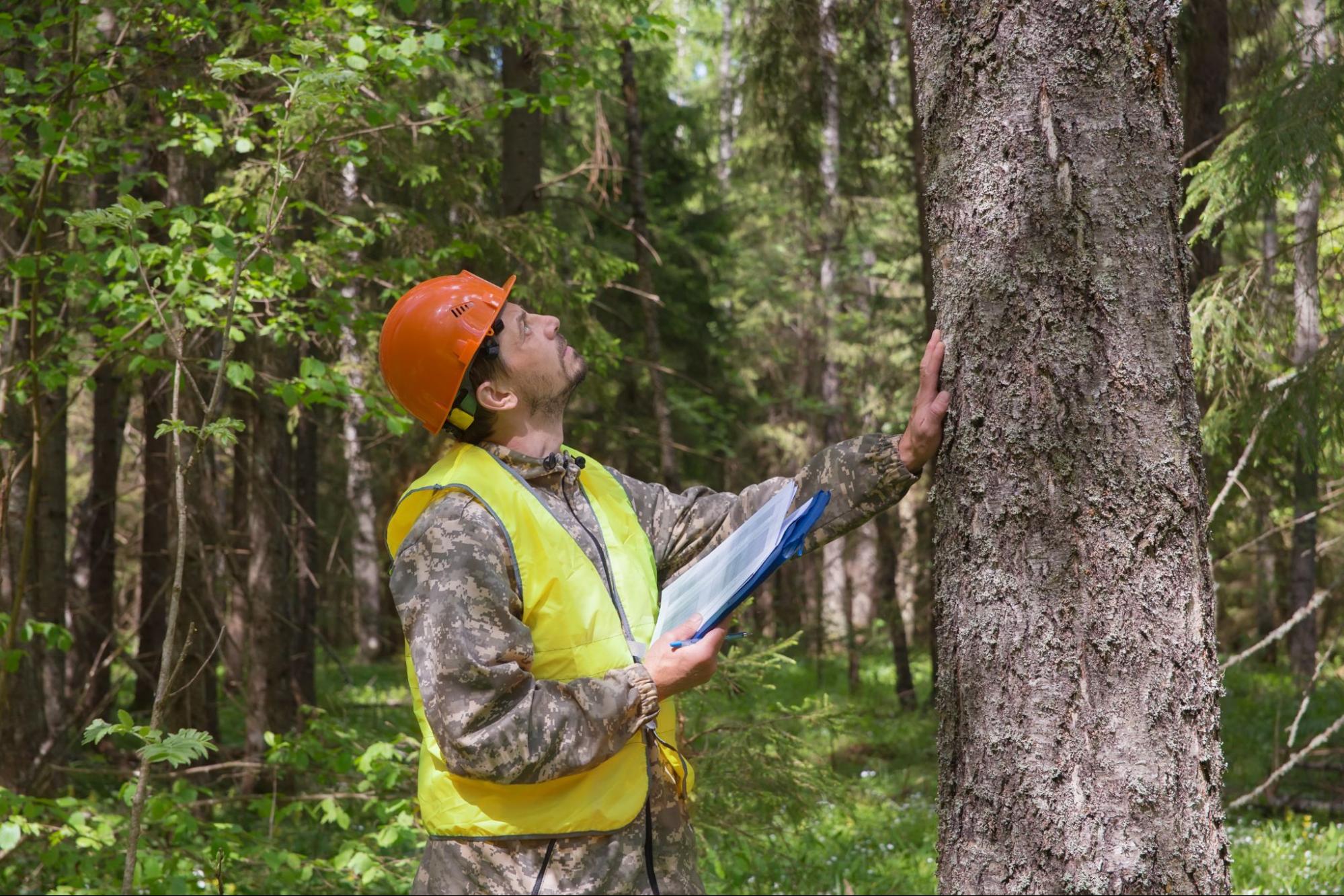
You don’t need to be an expert to spot early trouble. A careful walk-around can tell you a lot about a tree’s health. Here’s how our certified arborists approach a basic field assessment.
- Walk the full perimeter. Step back 20 to 30 feet and look at the tree from several angles. Note any lean, uneven canopy, or branches that look out of place compared to the rest of the crown.
- Inspect the trunk. Look for vertical cracks, seams, bulges, cavities, or peeling bark. Any wound larger than a quarter of the trunk’s circumference is a serious concern.
- Check the root flare and soil. The base of the trunk should widen slightly where it meets the ground. If the soil is heaving, cracked, or lifted on one side, the root plate may be failing. Exposed, severed, or decaying roots are warning signs too.
- Scan the canopy. Look up. Count how much of the crown shows dead branches, missing leaves during the growing season, or thinning foliage. More than half the crown in decline usually means the tree is beyond saving.
- Look for fungus. Mushrooms, conks, or shelf fungi growing at the base or along the trunk indicate internal decay. The visible fruiting body is only a small part of the problem underneath.
- Sound the trunk. Tap the trunk gently with a rubber mallet or the back of a hatchet. A solid tree gives a dull, firm sound. A hollow or decayed tree sounds noticeably different, almost drum-like.
- Document and call a professional. Take photos, note the date, and contact our certified arborists for a formal tree risk assessment. The experts at Red’s Tree Service can confirm your findings and recommend next steps.
10 Signs a Tree Should Be Removed
If you’re looking for a clear checklist, these are the 10 ways you can tell if a tree should be removed. Any one of these can be serious. When several appear together, removal is almost always the safest choice.
- Significant or sudden lean. A tree leaning more than 15 percent from vertical, or one that has recently shifted after a storm, is at high risk of failure. Sudden lean is often caused by root damage you can’t see from above ground.
- Hollow trunk. When a third or more of the trunk’s interior is hollow or rotted, the tree has lost the structural core it needs to stand upright in high wind.
- Large dead branches or crown dieback. If more than half the canopy is dead, broken, or failing to leaf out, the tree is in terminal decline. Large dead limbs over your roof, driveway, or walkway are an immediate hazard.
- Trunk cracks, seams, or wounds. Deep vertical cracks, open seams, or wounds covering more than a quarter of the trunk’s circumference weaken the tree’s ability to support its own weight.
- Fungus or mushrooms at the base. Visible fungal growth at the root flare or along the trunk almost always means internal rot. By the time mushrooms appear, the decay inside is usually well advanced.
- Epicormic shoots and water sprouts. When a tree produces clusters of small, weak shoots along the trunk or major limbs, it’s often a sign of severe stress or a damaged root system trying to compensate.
- Root damage or exposed roots. Construction, trenching, grade changes, or soil compaction near the root zone can kill a tree slowly. Exposed roots, severed roots, or soil heaving around the base are red flags.
- Pest or disease infestation. Advanced infestations of borers, scale, or systemic diseases like oak wilt can destroy a tree from the inside out. If treatment comes too late, removal is the only option.
- Dangerous location. A dying or structurally weak tree near your home, garage, power lines, or play area poses a risk that outweighs any benefit of keeping it standing.
- Multiple hazard signs stacked together. A single warning sign may be manageable. Three or four signs on the same tree, especially a lean combined with trunk decay and crown dieback, means removal should be your first call.
| Warning Sign | Severity | Recommended Action |
|---|---|---|
| Lean >15% from vertical | High | Removal or immediate assessment |
| Hollow trunk (1/3+ interior) | High | Removal |
| Crown dieback >50% | High | Removal |
| Trunk crack >25% circumference | High | Removal or cabling evaluation |
| Fungus at base | High | Removal |
| Epicormic shoots | Moderate | Assessment and possible treatment |
| Minor deadwood | Low | Pruning |
| Weak branch union | Moderate | Cabling and bracing |
Removal vs. Saving the Tree: Cabling, Bracing, and Pruning
Not every troubled tree needs to come down. Many trees we evaluate at Red’s Tree Service can be saved with the right intervention, which is why a professional assessment matters before you decide. Our certified arborists look at structure, health, location, and species before recommending removal.
Cabling and bracing can stabilize trees with weak branch unions or co-dominant stems. If a mature shade tree has a V-shaped split that hasn’t yet failed, steel cables installed high in the canopy can redistribute the load and extend the tree’s life for years.
Restoration pruning is often the right call after storm damage. If the main trunk is intact and more than half the canopy is still viable, careful pruning can reshape the tree, remove hazard limbs, and encourage healthy regrowth.
Deep root fertilization helps declining trees that are stressed by compacted soil, drought, or nutrient deficiency. When the structure is sound but vigor is low, feeding the root zone can restore health.
Removal becomes the only safe option when the structural core is compromised, when more than half the crown is dead, or when the tree threatens a target it can’t miss if it fails.
| Tree Condition | Intervention | Likely Outcome |
|---|---|---|
| Weak branch union, otherwise healthy | Cabling & bracing | Extended lifespan, reduced failure risk |
| Storm-damaged canopy, trunk intact | Restoration pruning | Full recovery over 2-3 seasons |
| Declining vigor, no structural issues | Deep root fertilization | Gradual return to health |
| Hollow trunk, major decay, severe lean | Removal | Hazard eliminated |
Which Trees Are Candidates for Removal
Some trees are clear candidates for removal based on condition, species, or location. If your tree fits one or more of these categories, it’s worth scheduling an assessment:
- Trees with more than 50% damage or decay. Once a tree loses more than half its structural or canopy integrity, recovery is unlikely.
- Dead or dying trees near structures or walkways. A dead tree near a house, driveway, or sidewalk is a liability waiting to happen.
- Invasive or structurally weak species. Bradford pears, mimosa, silver maple, and similar species are prone to splitting and short-lived. Replacing them with sturdier species often makes more sense than repeated repairs.
- Trees with multiple hazard signs. When a tree shows lean, decay, and crown dieback together, removal is almost always the right choice.
- Trees growing into power lines. Species that outgrow their location, especially under or beside utility lines, create ongoing safety issues that pruning can’t fully solve.
Frequently Asked Questions
How to tell if a tree needs to be removed?
Look for a combination of warning signs rather than a single symptom. Significant lean, large dead branches, trunk cracks, fungus at the base, hollow sound when tapped, and major root damage are the most reliable indicators. If you see two or more of these together, schedule a tree risk assessment with a certified arborist. The experts at Red’s Tree Service can confirm whether removal is necessary or if the tree can be saved.
Is it bad to leave a dead tree in your yard?
Yes, leaving a dead tree in your yard is a serious safety and liability concern. Dead trees lose structural strength quickly and can drop large limbs or fail entirely without warning, especially in storms. They also attract pests like termites and carpenter ants that can spread to healthy trees or your home. Removing a dead tree promptly is almost always the safer choice.
Is there a way to tell a tree’s age without cutting it down?
Yes. You can estimate a tree’s age by measuring the circumference of the trunk at about four and a half feet above the ground, then dividing by pi to get the diameter. Multiply the diameter in inches by the species-specific growth factor (available in forestry guides) to estimate age. It’s not exact, but it gives a reasonable range without harming the tree.
If you’ve spotted one or more of these warning signs on your property, don’t wait for a storm to make the decision for you. Red’s Tree Service is a family owned and operated business providing quality tree services for over 40 years to Memphis and the Mid-South, including Bartlett, Cordova, Collierville, Germantown, and Arlington. Our trained and certified arborist can assess your tree, recommend the safest option, and give you peace of mind that your property is safe. Contact our tree specialists at our Memphis office at 2069 Thomas Rd. by calling 901-848-5323 or visiting our contact page to request your free estimate.