

That Leftover Stump Is Causing Problems
That old stump in your yard isn’t just an eyesore. It’s a ticking clock for problems you’d rather avoid. Stumps attract termites, carpenter ants, and wood-boring beetles that can eventually find their way to your home’s foundation. They harbor fungal diseases that spread to healthy trees nearby. And if you’ve ever caught a toe on one while mowing, you know they’re genuine hazards.
Knowing when to grind and when to remove a stump matters more than most Memphis homeowners realize. Left alone, many stumps don’t simply rot away. They send up new shoots and spread root suckers across your lawn, creating more work than the original tree ever did. The good news? You have two solid options: stump grinding and full stump removal.
Grinding chips the stump below ground level while leaving roots to decompose naturally. Full removal extracts the stump and the major root ball. The right choice depends on what you plan to do with that space and how much you want to invest.
A certified arborist can assess your specific situation and recommend the best approach based on your property’s conditions, the tree species involved, and your plans for the space.
How Stump Grinding Differs from Full Removal
Stump grinding uses a machine to chip the stump 6 to 12 inches below the soil surface, leaving roots to decompose naturally underground. Full stump removal extracts the stump and its major root ball, leaving a large hole that requires backfill.
These two methods are not interchangeable, and each serves different purposes depending on your goals for the space.
Stump Grinding
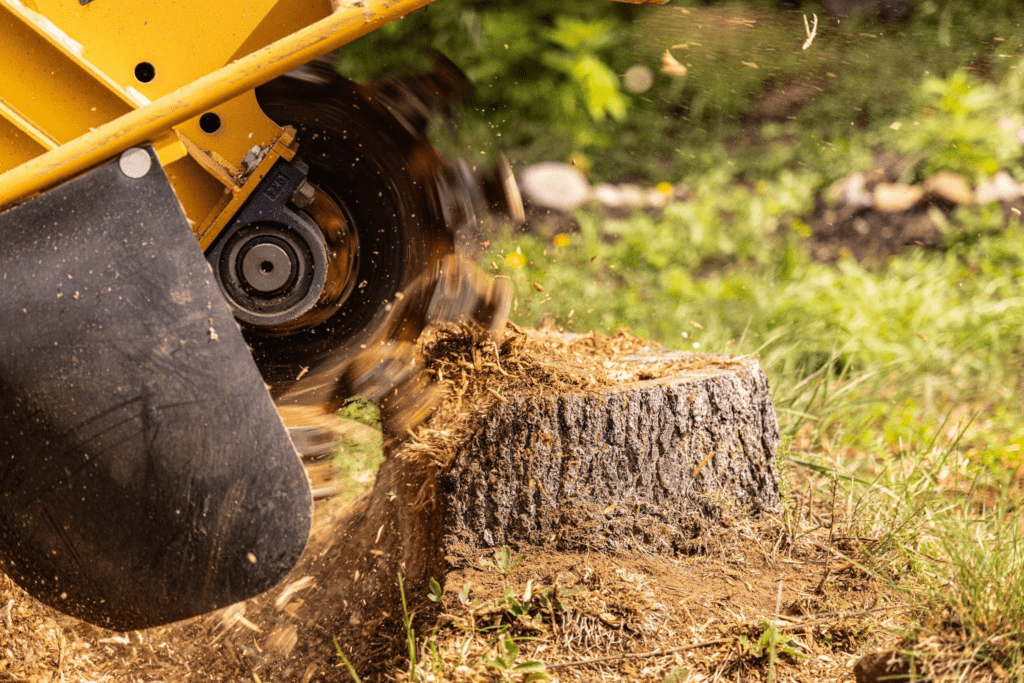
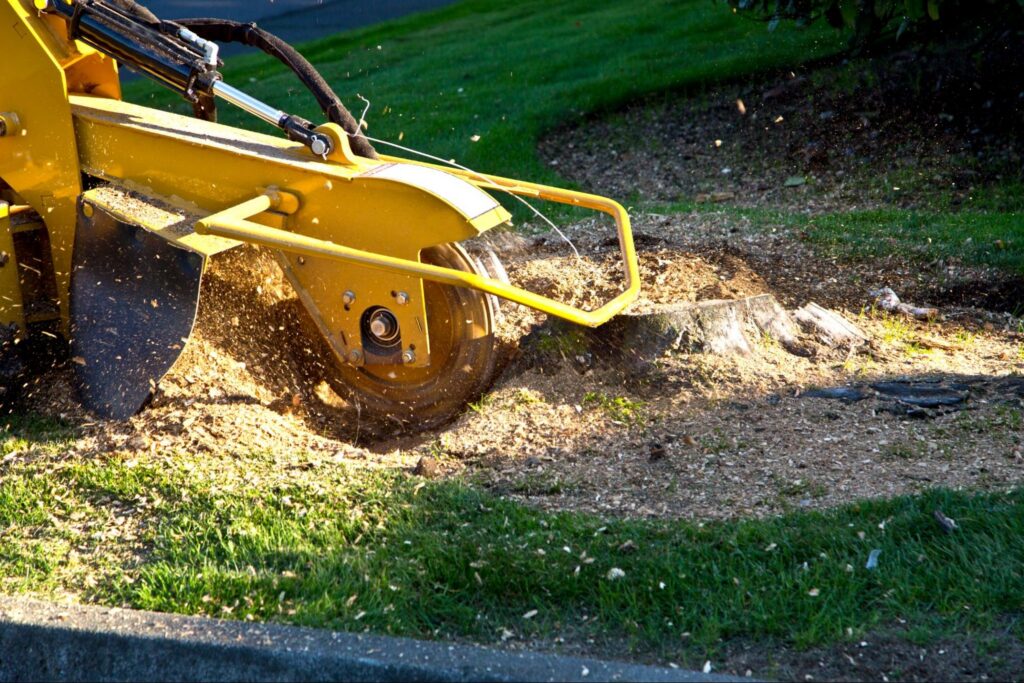
Stump grinding relies on a specialized machine with a rotating cutting wheel. The grinder chips away at the wood, reducing the stump to a pile of wood shavings below grade. The process is straightforward: position the machine, grind in a sweeping motion, and work down until the stump disappears beneath the soil surface.
What stays behind matters. Grinding leaves the entire root system intact underground. Those roots break down gradually over a long stretch of time, sometimes taking several years or longer depending on the species. For most lawn and garden applications in the greater Memphis climate, this isn’t a problem. The roots decompose on their own, and you can plant grass or flowers directly over the spot.
Full Stump Removal
Full stump removal is a different operation entirely. It extracts the visible stump plus the major root ball from the soil. This requires heavier equipment, often a backhoe or excavator, and significantly more labor. The crew digs around the stump, cuts major roots, and lifts the entire mass out of the ground.
The result is a large hole. Depending on the tree’s size, you might be looking at a crater several feet wide and deep. That hole needs backfilling with quality soil, and the ground will need time to settle before you can use it.
A skilled operator can grind most residential stumps in one to two hours. Full removal of the same stump might take half a day or longer, factoring in excavation, root cutting, extraction, and backfill work.
Stump Grinding vs. Full Stump Removal: The Benefits of Each
Both methods solve the stump problem. But they offer distinct advantages depending on your goals.
Advantages of Stump Grinding
- Speed and convenience. Most grinding jobs wrap up in a single visit, often in under two hours.
- Lower cost. Less equipment and labor means real savings for your property investment.
- The process causes minimal yard disruption. No massive holes, no heavy excavation tracks across your lawn.
- Free mulch. Grinding produces wood chips you can spread in garden beds or around trees. Just keep the mulch pulled back from tree trunks to prevent moisture problems.
- Your neighbors will appreciate the reduced noise compared to full excavation work.
When Full Removal Makes More Sense
- Complete elimination. No roots means zero chance of regrowth or suckers popping up across your yard.
- If you’re planning patios, driveways, or foundation work, full removal gives you construction-ready ground.
- Disease control. Removing infected root material helps stop pathogens from spreading to nearby trees.
- Clears the way for planting a new tree in the exact same spot, with fresh soil for new roots to grow into.
- Eliminates all wood material that could harbor insects, giving you peace of mind that your property is safe from pest damage.
Both methods accomplish the core goal: getting rid of pest habitats and reducing the spread of fungal diseases to your other trees. The question is simply how thorough you need to be. A certified arborist can help you weigh these factors based on your property’s specific conditions.
Stump Grinding vs. Stump Removal: Side-by-Side Comparison
When you’re weighing options, a clear comparison helps. Here’s how the two methods stack up across the factors that matter most to Mid-South homeowners.
| Factor | Stump Grinding | Full Stump Removal |
|---|---|---|
| Typical Cost | $150 to $500 | $500 to $1,500+ |
| Time Required | 1 to 2 hours | Half day or more |
| Yard Disruption | Minimal | Significant |
| Root Removal | Roots remain underground | Roots extracted |
| Regrowth Risk | Possible with some species | None |
| Best For | Lawn restoration, gardens | Construction, hardscaping |
| Cleanup | Wood chips (reusable) | Hole requires backfill |
| Environmental Impact | Low | Moderate to high |
For most residential situations in Memphis and the mid-south, grinding handles the job well. Your lawn recovers quickly, and you’re not left managing a construction zone.
Full removal becomes the right call when you have specific plans. If you’re building a deck, installing a concrete patio, or planting a large shade tree in that exact location, extraction makes sense despite the added cost and disruption.
One often-overlooked consideration is the impact on surrounding trees. Grinding stays contained to the target stump. Excavation for full removal can damage the root systems of nearby trees, potentially causing stress or decline in trees you want to keep healthy. An ISA Certified Arborist can evaluate these risks before work begins.
What Factors Affect Stump Grinding and Removal Costs?
Several variables determine what you’ll pay for stump work in the greater Memphis market. Stump diameter, root system complexity, soil conditions, site accessibility, the number of stumps, and cleanup preferences all play a role. Understanding these variables helps you plan costs accurately and avoid surprises.
Stump diameter drives pricing more than any other factor. A 12-inch stump costs less than a 36-inch stump because larger stumps require more time, more fuel, and more wear on equipment. Root system complexity and soil conditions also matter, especially for removal projects. Some trees, like the oaks and maples common across Memphis properties, develop extensive root networks that make extraction challenging. Others have more compact root balls that come out with less effort.
Rocky soil dulls grinding teeth faster and makes excavation harder. Clay soil, which is common throughout the Mid-South, compacts around roots and demands more work to clear. These ground conditions can add time and cost to either method.
Can equipment reach the stump easily? Fenced backyards, steep slopes, and narrow side yards all create challenges when it comes to site accessibility. If the crew needs to hand-carry equipment or use smaller machines, the job takes longer and costs more as a result.
If you have multiple stumps, many tree service professionals offer per-stump pricing breaks when you’re clearing several at once. Doing them all together is a smart way to save money.
Cleanup preferences add to the total as well. Some homeowners want every wood chip hauled away. Others want the hole backfilled with topsoil and seeded. These extras are worthwhile but factor into your overall investment. Asking about cleanup options upfront during your free quote helps you budget accurately.
Should You Grind or Remove the Stump in Your Yard?
Grind the stump if you plan to restore your lawn or garden. Remove it fully if you’re building, hardscaping, or replanting a tree in the same spot.
Choose grinding when:
- You plan to grow grass over the spot
- You want to install a flower bed or garden
- Keeping costs down is a priority
- You need the job done quickly
- The surrounding yard should stay undisturbed
Choose full removal when:
- You’re building a patio, deck, or driveway over the stump’s location
- You want to plant a new tree in the exact same spot, since old roots compete with new ones for space and nutrients
- Your tree came down due to oak wilt, Dutch elm disease, or another transmissible condition, and extracting all root material helps protect remaining trees
- You’re dealing with a species known for aggressive regrowth, like willows, poplars, or certain maples
- Future construction is planned for the property
Homeowners watching expenses often start with grinding. It solves the immediate problem at a lower price point. If regrowth becomes an issue or plans change, you can reassess later. A tree risk assessment from a certified arborist helps clarify which approach makes the most sense for your property.
Frequently Asked Questions About Stump Grinding and Removal
Can I plant a new tree where a stump was ground?
Yes, but proper soil preparation is essential. Remove as much wood chip debris as possible, add quality topsoil, and let the ground settle before planting. For best results, position your new tree slightly offset from the original stump location so roots have fresh soil to grow into. Memphis homeowners planting new shade trees should also consider species selection to avoid repeating problems with disease-prone varieties.
How long does a ground stump take to fully decompose?
Most ground stumps and their remaining root systems take several years to a decade or more to fully break down. The timeline depends on tree species, soil conditions, and moisture levels. Hardwoods like oak decompose more slowly than softwoods like pine. You won’t notice this process since it occurs entirely underground and doesn’t affect your lawn. The warm, humid climate across the Mid-South can speed decomposition compared to drier regions.
Will stump grinding kill the roots?
Not always. Grinding removes the visible stump but leaves roots intact. Most species won’t regrow from roots alone. Certain trees, including willows, poplars, and some maples, may send up shoots from surviving roots. If regrowth concerns you, discuss this with a certified arborist before deciding on a method.
Is stump removal necessary before building?
Yes. Any construction involving foundations, concrete slabs, or pavers requires full stump removal. Decomposing wood creates voids that cause settling and cracking. Building codes in Memphis and surrounding municipalities typically require organic material removal from construction zones. Skipping this step can lead to costly structural problems down the road.
Why hire a professional instead of renting a grinder?
Professional-grade stump grinders are significantly more powerful and efficient than rental units available at home improvement stores. Beyond the equipment difference, there are real safety concerns to consider. Flying debris, rotating blades, and kickback create genuine hazards for anyone without training. A certified arborist also knows how to assess the stump for hidden risks, like buried utility lines or root systems intertwined with nearby trees, before any cutting begins. Professional crews carry insurance and handle thorough cleanup as part of the job, which protects you from liability and saves you a full day of hard labor.
What happens to the wood chips after grinding?
You have options. Many homeowners spread the chips as mulch around trees and garden beds. Just keep mulch away from tree trunks to prevent moisture problems. Your tree service can also haul the chips away, and some companies offer to fill the hole with topsoil as part of their service. In the Mid-South, wood chip mulch breaks down relatively quickly in the warm months and adds organic matter back into the soil.
If that stump has been sitting on your to-do list long enough, a certified arborist can help you figure out the right approach. Whether you need grinding for a simple lawn restoration or full removal ahead of a construction project, the tree service professionals serving Memphis, Collierville, and the mid-south at Red’s Tree Service can assess your stump and recommend what fits your needs. Contact our tree specialists to request a free quote.