
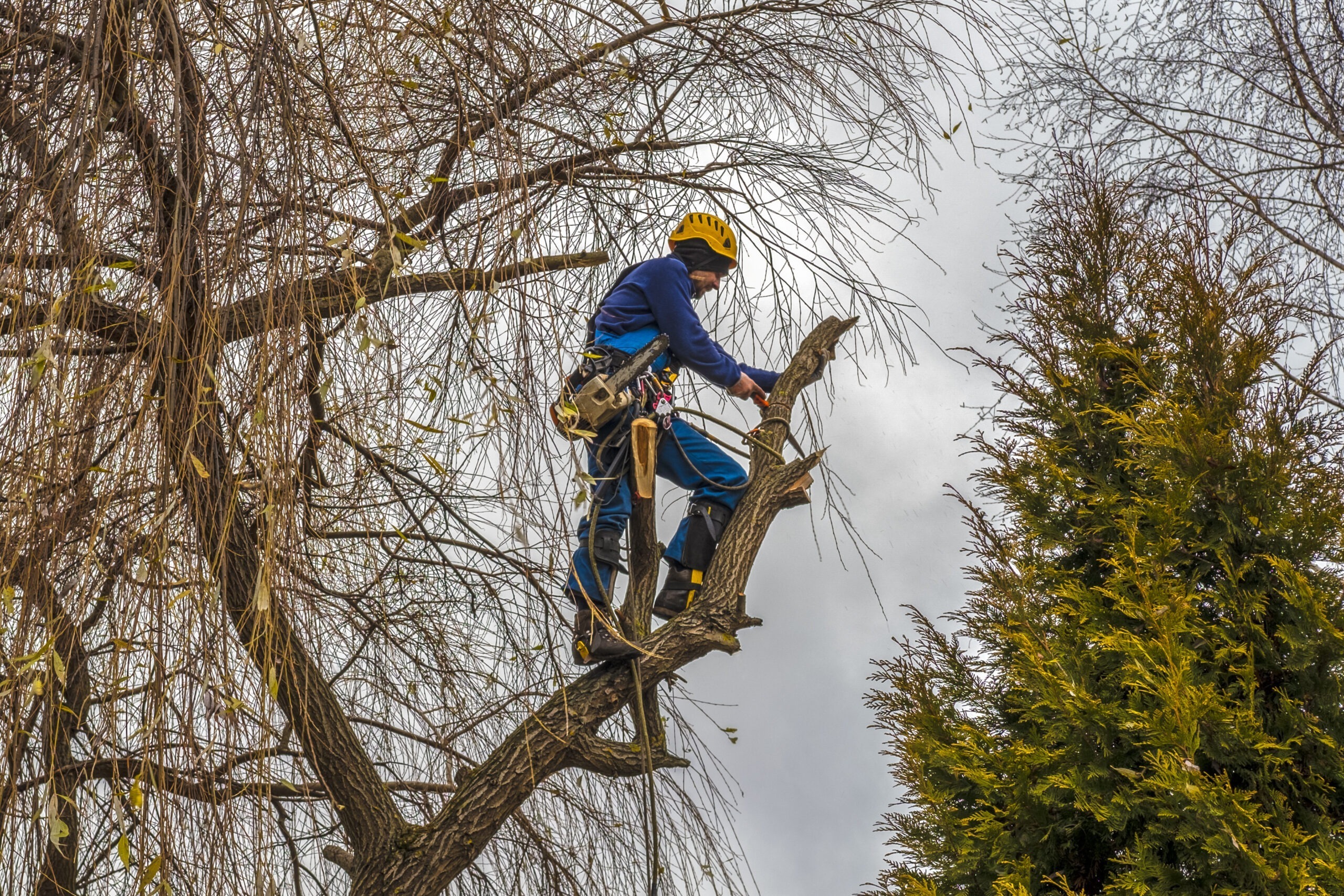
Taking down a tree in your own yard can look straightforward, but the real work sits in the planning and the cuts. These homeowner tree removal safety tips are written for property owners who want to understand what a safe felling actually requires, where the risks hide, and when the smart call is to bring in a certified arborist. Red’s Tree Service has been handling tree work across Memphis and the Mid-South for over 40 years, and the guidance below reflects the same safety standards our expert team follows on every job.
What Is Homeowner Tree Removal?
Self-performed tree removal is the process of felling a tree on your own property without hiring a certified arborist. It typically involves a chainsaw, directional felling cuts, and a careful read of the tree’s lean, health, and surroundings. It is generally only safe for small, healthy trees under 5 inches in trunk diameter and under about 20 feet tall.
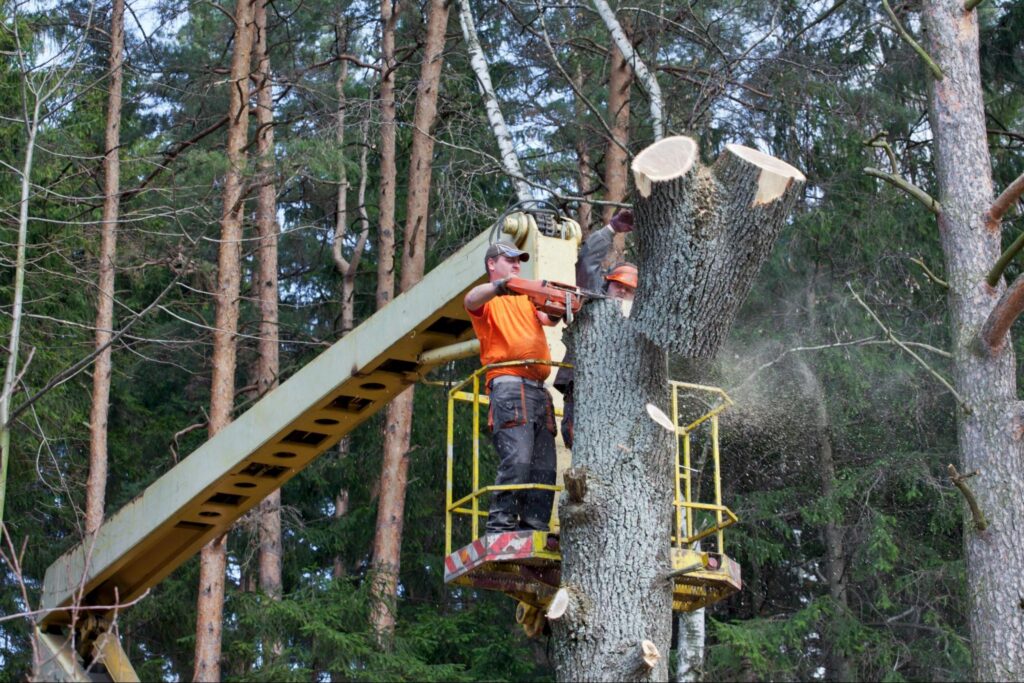
What homeowner removal is not is a replacement for professional work. Professional removals often use cranes, bucket trucks, rigging lines, and ground crews to lower sections of large trees in controlled pieces. That approach is required anytime a tree is near a home, a fence line, utility lines, or a driveway where free-fall is not an option.
The honest truth is that even small trees carry real risk. A misjudged lean, a hidden cavity, or a pinched chainsaw bar can turn a routine Saturday project into a serious injury or a damaged roof. If any part of the job feels beyond your skill set, the experts at Red’s Tree Service can handle the assessment and the removal safely.
How to Safely Remove a Tree: Step-by-Step Process
If your tree meets the self-removal criteria (small, healthy, and well clear of structures), the process below outlines the correct sequence. Skipping steps is where most accidents start.
- Inspect the tree. Walk a full circle around it. Look for lean, dead limbs, cracks in the trunk, cavities, fungal growth, and any sign of rot. Dead or decayed wood behaves unpredictably when it falls.
- Clear the fall zone and plan two escape routes. The drop area should be at least twice the tree’s height and free of vehicles, lawn furniture, and anything breakable. Mark two retreat paths at roughly 45 degrees away from the planned fall direction, on the opposite side of the trunk.
- Gear up with proper PPE. A hard hat, safety glasses, hearing protection, cut-resistant chainsaw chaps, sturdy work gloves, and steel-toe boots are the minimum. PPE for tree removal is not optional.
- Cut the notch on the fall side. Make a 70-degree open-face notch, with the depth equal to about one-quarter of the trunk diameter. The notch opens the direction the tree will fall.
- Make the back cut. Cut horizontally from the opposite side, slightly above the base of the notch. Stop before you reach the notch, leaving a strip of uncut wood called the hinge. The hinge controls the fall.
- Retreat immediately. As soon as the tree begins to lean and fall, move down your escape route. Never turn your back on a falling tree, and never stand directly behind it.
Benefits of Following Proper Safety Protocols
Strict safety practices are not paperwork. They are the difference between a clean job and a trip to the emergency room. Here is what proper protocol actually protects.
- Reduced risk of chainsaw injuries and fatalities. According to the U.S. Bureau of Labor Statistics, tree care is one of the most dangerous occupations in the country, with roughly 100 worker deaths each year. Homeowners face similar hazards without the training or crew backup.
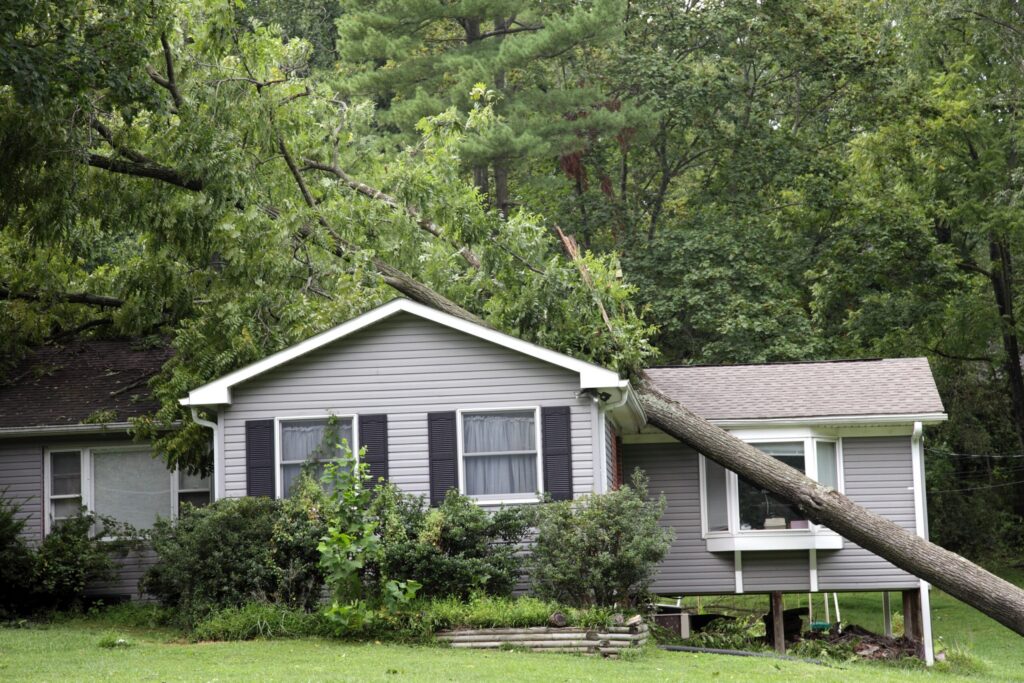
- Protection for your home, vehicles, and your neighbor’s property. A tree that falls the wrong way can crush a roof, flatten a fence, or land across a parked car. Planning the fall zone correctly keeps the damage at zero.
- Prevention of utility outages. Contact with a power line can energize the tree, the saw, and the ground around you. It can also knock out power for an entire block. Any tree within reach of a line is a job for the professionals, every time.
- Preserved homeowner insurance coverage. Many policies will deny claims if damage results from obvious negligence, like felling a tree without proper equipment or hiring an unlicensed cutter. Following safe practice keeps your coverage intact.
- Fewer hung-up trees and barber-chair failures. A proper notch and hinge keep the tree from splitting vertically up the trunk (a “barber chair”) or getting caught in another tree on the way down. Both scenarios can throw the trunk back toward the sawyer at high speed and have caused crushing injuries and chainsaw kickback accidents on jobs across the Mid-South.
- Transferable skills for ongoing yard care. Learning to assess lean, read wood tension, and run a chainsaw safely makes future small-tree work and limb cleanup much safer.
Safety protocols also protect the people around you. Kids, pets, and neighbors who wander into a work zone during felling can get seriously hurt in seconds. A clear, roped-off area and a spotter are small efforts that prevent large tragedies.
Homeowner vs. Professional Tree Removal: Comparison
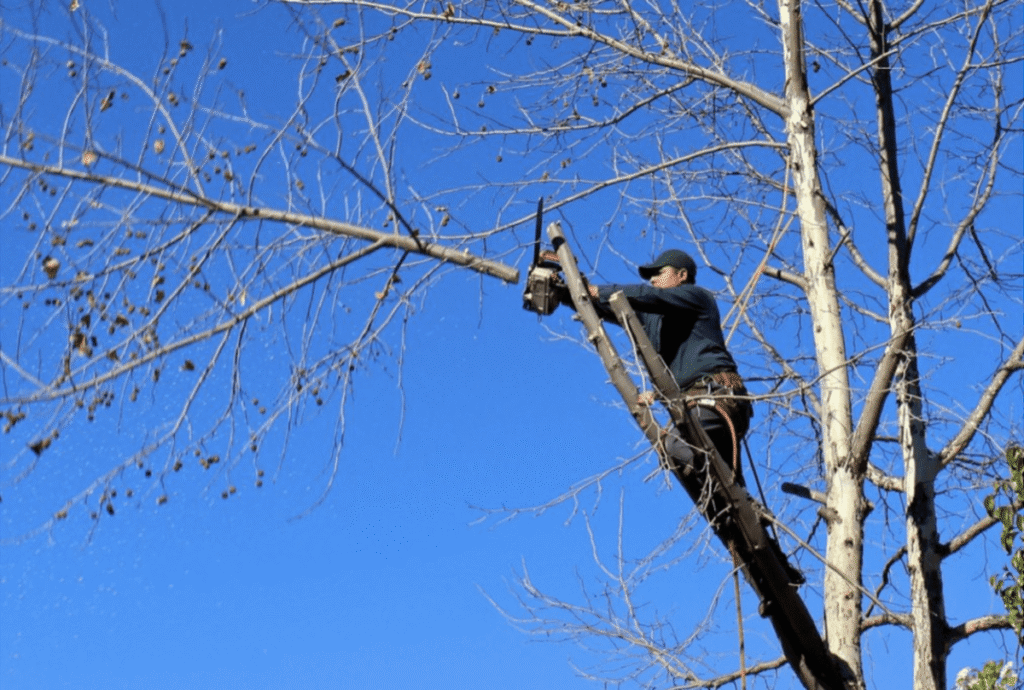
The decision between tackling the job yourself and hiring help usually comes down to five factors. The table below lays them out side by side. For anything beyond a small, isolated tree, the experts at Red’s Tree Service bring the equipment, training, and insurance that make the job genuinely safe.
| Factor | Homeowner Tree Removal | Professional Tree Removal |
|---|---|---|
| Tree size | Under 5″ trunk diameter, under 20 ft tall | Any size, including mature hardwoods |
| Location | Needs 2x tree-height clearance from structures | Tight spaces, close to homes, over fences |
| Equipment | Chainsaw, wedges, basic rope | Cranes, bucket trucks, rigging, chippers |
| Insurance | Risk falls entirely on the homeowner | Licensed, insured crew with liability coverage |
| Power lines | Never safe for a homeowner to attempt | Required; coordinated with utility when needed |
A trained and certified arborist does more than cut. They evaluate the tree’s structure, root health, and the surrounding site before a single cut is made. That assessment is often what prevents the problems a self-performed approach cannot anticipate. If your tree sits near a house, a driveway, a fence, or any utility line, that call belongs with the professionals.
Is Homeowner Tree Removal Right for You?
Use the checklist below to self-assess. If any single item is a “no,” the job belongs with a certified arborist.
- The tree is under 5 inches in trunk diameter and under 20 feet tall
- The tree is healthy, with a straight trunk, no dead limbs, and no visible cavities or fungal growth
- There is at least 2x the tree’s height of open clearance from the house, garage, shed, fence, and any neighbor’s property
- You have hands-on chainsaw experience and all required PPE
- There are no power lines, phone lines, or roads inside the fall zone
- You have a helper on site and a clear plan for two escape routes
- You are physically able to retreat quickly on uneven ground
If every box is checked, a careful self-performed approach can work. If even one fails, the smart move is a professional assessment. Red’s Tree Service offers a free quote across Memphis and the Mid-South, and our certified arborist can tell you quickly whether the tree is a candidate for straight felling, sectional removal, or simply trimming to resolve the real issue.
Frequently Asked Questions
How do you cut a downed tree safely?
Study the log before you cut. Bucking a felled tree is where tension and compression become the main hazards: the top side under tension will pull apart, and the bottom under compression will pinch the bar. Make a shallow relief cut on the compression side first, then finish from the tension side. Never stand directly over the log, and keep both feet clear of the chain path.
What is the fatality rate for tree workers?
Roughly 100 fatalities per year. According to the U.S. Bureau of Labor Statistics, tree care and arboriculture consistently rank among the most hazardous occupations in the country. Falls, struck-by injuries from falling limbs, and chainsaw lacerations are the leading causes. Homeowners attempting removals without training face comparable risks.
What are the five D’s of pruning?
Dead, damaged, diseased, dying, and deranged (crossing or poorly structured) branches. These are the categories of wood that should be removed first during any pruning. Focusing on these preserves the tree’s health and natural form while improving safety. For structural pruning on larger trees, a certified arborist should guide the work.
What part of a tree should not be cut?
Leave the branch collar alone. That swollen area where a branch meets the trunk contains the tree’s natural defense tissue that seals wounds and prevents decay. You should also avoid removing the central leader on most species. Cutting flush to the trunk or topping a tree causes long-term damage and often creates future hazards.
What PPE is required for chainsaw use?
At a minimum: a hard hat, safety glasses or a mesh face shield, hearing protection, cut-resistant chainsaw chaps covering the thighs and shins, snug-fitting gloves, and sturdy boots (steel-toe preferred). Loose clothing and open-cuff sleeves should be avoided. Chaps alone have prevented countless serious leg injuries.
How far should a tree be from a house to safely fell it?
Twice its own height, minimum. A tree should sit at least that far away from any structure, fence, vehicle, or utility line before a homeowner felling is reasonable. A 20-foot tree needs a 40-foot clear fall zone in the planned direction. If the clearance is tighter than that, the tree needs to come down in sections using proper rigging, which is a job for the professionals.
Ready for a professional assessment? Red’s Tree Service is a locally owned and operated, family owned and operated business serving Memphis, Bartlett, Cordova, Collierville, Germantown, Arlington, and the greater Mid-South. Our expert team includes a trained and certified arborist who can evaluate your tree and provide a free quote. Visit us at 2069 Thomas Rd., Memphis, TN, or contact our tree specialists at 901-848-5323 to schedule your assessment.